
The Gap Between Knowledge and Performance
Leadership development is often built around frameworks, models, and conceptual understanding. These approaches can provide structure, but they rarely guarantee performance. Many leaders can explain what effective leadership looks like, yet struggle to execute consistently when conditions become complex, unpredictable, or high-stakes. This gap between knowing and doing is where most leadership efforts break down.
The difference becomes clear in environments where outcomes depend on execution. In those settings, leadership is no longer abstract. It is observable, measurable, and directly tied to results. Service dog training operates within this kind of environment. It requires precision, consistency, and reliability in situations where failure has real consequences. The process does not reward good intentions or partial understanding. It rewards behavior that works. This provides a useful lens for leadership: effectiveness is determined by what is done consistently, not by what is understood.
Why High-Stakes Environments Reveal Leadership
High-stakes environments share a set of defining characteristics. They involve real consequences, require coordination between individuals, and introduce variables that cannot be fully controlled. In these conditions, intent does not carry weight on its own. Performance is judged by outcomes, and those outcomes are driven by execution.
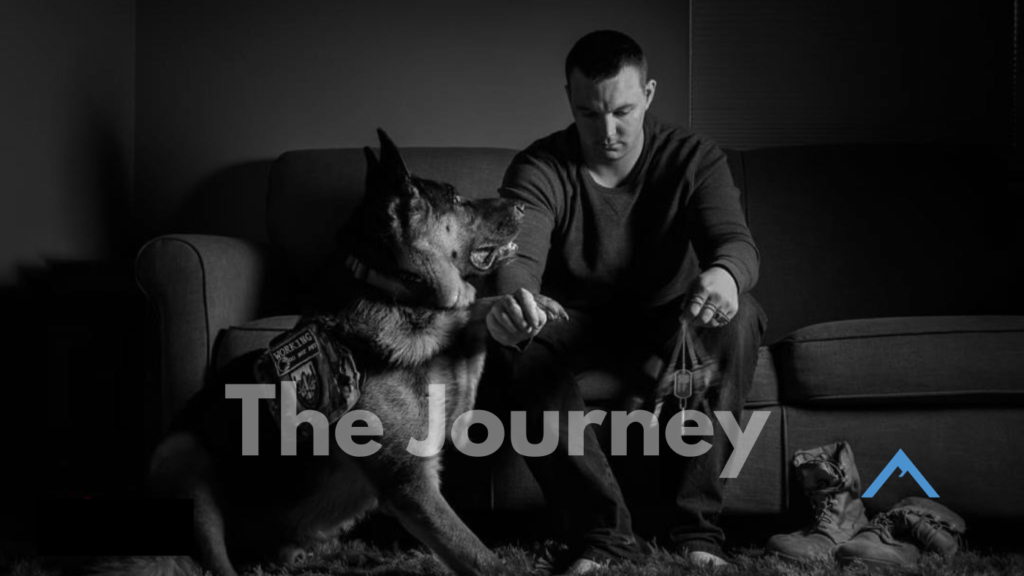
Service dog teams operate in this context every day. They navigate public spaces, manage distractions, and respond to situations that cannot be predicted in advance. The relationship between handler and dog depends on clear communication and consistent behavior. When those elements are present, the system functions as intended. When they are not, the breakdown is immediate and visible.
These conditions remove ambiguity. They show whether expectations have been clearly established, whether communication is effective, and whether consistency has been maintained. Leadership becomes something that can be evaluated in real time rather than discussed in theory.
Leadership as Observable Behavior
Leadership is often described in terms of qualities such as vision, influence, or communication. While these descriptions have value, they do not fully capture what determines performance. What matters is whether leadership can be observed in action.
Observable leadership is defined by consistency, repeatability, and predictable outcomes. In service dog training, these elements are not optional. A handler must provide clear direction and follow through in the same way each time. Responses must be structured rather than reactive. Over time, these patterns create reliability.
The same principle applies to teams. Individuals do not respond to intention or stated values. They respond to patterns of behavior. When expectations shift or follow-through is inconsistent, performance becomes unstable. When behavior is clear and consistent, performance improves. Leadership, in this sense, is not something that is declared. It is something that is demonstrated through repeated action.
The Partnership Model
Effective leadership is best understood as a structured partnership rather than a system of control. That partnership requires a progression that builds reliability over time. In practice, this progression begins with alignment. Leaders must establish clear objectives and expectations before any meaningful work begins. Without that clarity, inconsistency is almost inevitable.
The next step involves selection. Decisions about people, tools, and strategy determine the foundation on which everything else is built. Poor decisions at this stage create limitations that are difficult to correct later. Once those decisions are made, the focus shifts to building the foundation. This is where communication patterns are established and expectations are reinforced through repetition. Most failures originate at this stage, even if they are not immediately visible.
Development follows as skills are refined in increasingly complex conditions. This introduces controlled pressure and prepares individuals for real-world demands. Eventually, performance is tested in environments that include variability and distraction. This stage determines whether the system is reliable under stress. The final stage is accountability. Without consistent reinforcement of standards, performance declines over time. Reliability depends on maintaining the system, not simply building it.
This progression reflects how consistent performance is achieved in practice. It is not theoretical. It is based on what is required to produce reliable outcomes in environments where inconsistency is not an option.
Common Failure Points in Leadership and Training
Failures in leadership and training tend to follow predictable patterns. They are rarely the result of a single event. Instead, they develop gradually as small inconsistencies accumulate. One of the most common issues is a lack of clear expectations. When expectations are not defined precisely, individuals are left to interpret them on their own, which leads to variation in performance.
Another frequent issue is a lack of follow-through. When leaders do not apply standards consistently, it creates uncertainty about what matters. Over time, this reduces accountability and weakens performance. There is also a tendency to rely too heavily on explanation rather than repetition. Understanding a concept does not ensure that it will be applied correctly, particularly under pressure. Finally, many systems are built and tested in controlled environments that do not reflect real conditions. When those systems are exposed to variability, they often fail.
These issues are not unique to any one field. They appear in service dog training, and they appear in organizations. The difference is that in high-stakes environments, the consequences are more immediate and easier to identify.
What Effective Leadership Systems Prioritize
Effective systems are designed with execution in mind. They focus on producing consistent outcomes rather than simply conveying information. This requires clear criteria for success so that expectations are not left open to interpretation. It also requires consistency in how those expectations are applied. When standards change depending on the situation, reliability is compromised.
Repetition is another critical element. Skills must be practiced across a range of conditions so that performance is not dependent on a specific environment. Over time, this builds confidence and reduces variability. Accountability ensures that these elements are maintained. Without it, even well-designed systems begin to degrade.
In service dog teams, these principles result in stable, predictable behavior and a high level of trust between handler and dog. In organizations, they create the conditions for consistent performance and reduce the likelihood of breakdowns under pressure.
Application to Organizations and Teams
The structure that supports reliable performance in service dog training can be applied directly to leadership and organizational systems. Alignment translates to strategic clarity, ensuring that objectives are well defined and understood. Selection applies to decisions about hiring, resources, and approach, all of which shape the organization’s capabilities.
Foundations correspond to onboarding and communication systems, where expectations are established and reinforced. Development reflects ongoing training and skill-building, allowing individuals to improve in increasingly complex situations. Execution represents performance in real operating conditions, where variability and pressure are present. Accountability shapes culture by ensuring that standards are maintained over time.
This approach is not limited to a specific industry. It provides a practical framework for building systems that perform reliably, even as conditions change.
Learn more: Experiential Facilitator Training
Conclusion
Leadership is often presented as a set of ideas or principles. In practice, it is defined by behavior. Environments that require consistent performance make this distinction clear by tying outcomes directly to execution.
Service dog training offers a practical example of how leadership functions under these conditions. It demonstrates that clarity, consistency, and accountability are not abstract concepts. They are operational requirements that determine whether a system works.
Leaders who focus on these elements build systems that perform reliably. Those who rely primarily on theory often find it difficult to translate knowledge into results.
Next Steps
If the goal is to improve performance, the next step is to move beyond concepts and apply a structured approach in real-world conditions. Peak Experience programs are designed to do exactly that by focusing on behavior, accountability, and execution.
Explore Peak Experience programs to see how these principles can be applied to your team or organization.
Read More: The Journey of a Service Dog Team: What It Really Takes