
Some leadership coaches teach from slides. Some teach from books.
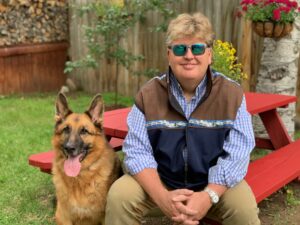
Michele Forto draws upon extensive practical experience to inform her leadership instruction.
As she works toward her doctorate in strategic leadership (2026), she has learned this experience is not hypothetical but grounded in real-world practice, including running businesses, managing operational teams, navigating challenging conditions in Alaska, building media companies, and working within family businesses where leadership decisions have lasting relational impacts.
Never in a million years did I imagine my life being turned upside down and taking a literal turn.
Michele Forto on Dog Works Radio Tweet
This distinction fundamentally influences her approach to leadership education.
Extended observation of leadership training reveals recurring patterns. Much of the content appears polished yet disconnected from practical realities, often presenting abstract concepts without addressing real-world challenges. However, leadership assumes a different character when individuals are fatigued, uncomfortable, under pressure, or accountable for significant outcomes.
This article highlights Michele Forto, whose work distinguishes itself in these demanding contexts, on an important day in her life, her birthday today.
Her programs, offered through Peak Experience and Dreamchaser Leadership, are founded on the principle that individuals develop leadership skills more effectively through direct experience than through theoretical discussion.
This experiential learning may occur during wilderness expeditions in Alaska.
It may also take place while navigating a dog team through challenging terrain.
Experiential learning can also emerge during corporate leadership exercises, particularly when communication deteriorates and teams recognize that their primary challenge is not strategic but relational.
Often, the underlying issue is trust.
Michele Forto recognizes that leadership challenges are seldom isolated. Organizations may attribute difficulties to productivity when the root cause is often communication (Hubbart, 2023). Similarly, families may perceive succession planning as the issue, while the underlying concerns involve identity, expectations, and unresolved conflict.
Most organizations possess sufficient intelligence. However, they often lack alignment, and this is a primary reason experiential leadership methodologies are effective.
Individuals respond differently under unpredictable conditions. Hierarchies become less rigid, communication becomes more transparent, and teams shift from relying on formal language to practical collaboration.
Wilderness environments tend to accelerate this developmental process. Van Droffelaar (2022) notes that outdoor leadership programs require participants to focus on pacing, preparation, situational awareness, and group dynamics. Minor communication errors become apparent rapidly, as do effective leadership behaviors. Competent leaders stabilize groups without exerting dominance and foster clarity without inducing panic.
These lessons translate directly to business leadership contexts.
Michele Forto has extensive experience at the intersection of outdoor and organizational leadership. As co-founder of Alaska Dog Works, co-editor of Mushing Magazine, and co-founder of Dog Works Radio, she has operated in environments where effective leadership is essential for execution. Teams must function cohesively, systems must remain operational, and clear communication is required even under challenging conditions.
This practical dimension is critical, because leadership theory that lacks operational understanding frequently fails under pressure. While discussing organizational culture is straightforward during stable periods, maintaining effective communication and trust is significantly more challenging during uncertainty, financial stress, or rapid growth.
This relevance is evident in her work on family business succession.
Furthermore, family businesses face distinct leadership challenges stemming from the close integration of business systems and personal relationships. Bose (2025) summarizes that leadership transitions extend beyond operational decisions, encompassing issues of identity, legacy, trust, and longstanding unspoken expectations. Many organizations delay addressing these critical discussions.
Experiential leadership fosters environments where these conversations occur more honestly and productively, as participants engage in real-time interactions rather than defend positions in formal settings.
Michele Forto’s leadership philosophy also reflects distinctly Alaskan characteristics. The environment demands genuine competence over performative displays. The weather often reveals weak planning, and the wilderness quickly exposes the ego. Teams either function together or they do not.
Leadership becomes practical very fast when conditions stop cooperating. Such realities significantly influence individual development.
This may represent the broader lesson underlying Michele Forto’s work: leadership is cultivated not in ideal conditions, but through adaptation, communication, responsibility, and repeated exposure to challenges over time.
Not all leaders require participation in mountain expeditions or dog team navigation to grasp these principles. However, most leaders would benefit from increased real-world leadership experience.
Areas of Leadership Development Michele Forto Focuses On
Corporate Leadership Training
These programs are structured to enhance communication, trust, adaptability, and team alignment through experiential learning rather than passive instruction.
Outdoor Leadership
Leadership development is facilitated through outdoor challenges, expedition dynamics, and real-time problem solving in unpredictable environments.
Experiential Facilitation and Team Development
Facilitators, educators, and organizational leaders are trained to lead groups more effectively using hands-on experiential methods.
Leadership Development Through Peak Experience
At Peak Experience, Michele Forto and her team collaborate with organizations, educators, entrepreneurs, and leadership teams seeking substantive leadership development beyond surface-level training, offering practical leadership development rooted in experience, adaptability, communication, and trust under pressure.
Because leadership is easier to talk about than it is to practice.
Sources:
Bose, K. M. (2025). When Leaders Say Goodbye: A Narrative Inquiry into Navigating the Trust and Relational Dynamics During a Succession Event.
Hubbart, J. A. (2023). Organizational change: The challenge of change aversion. Administrative Sciences, 13(7), 162.
Van Droffelaar, B. (2022). Wilderness experiences foster authentic leadership. In Leadership for Sustainable and Educational Advancement-Advancing Great Leaders and Leadership. IntechOpen.