As the Adventure Strategist and family business coach, I’ve spent years helping leaders navigate one of the most challenging transitions any organization faces: passing the torch to the next generation.
My Doctor of Strategic Leadership (DSL) dissertation, Transgenerational Succession in the Family Business: Focusing on the Emerging Female Leader, grew out of real-world observations, including Alaska’s unique business environment. The result is a practical 15-step model designed to help family firms move from survival to thriving across generations.
Why Succession Planning Matters
Too many family businesses fail to survive the transition to the second or third generation. The reasons are rarely about the numbers on the balance sheet. They’re about people, systems, communication, and readiness.
Like a sled dog team hitting a stretch of changing trail conditions new snow, hidden hazards, or shifting winds success depends on preparation, trust in your team, and the ability to adapt without losing momentum.
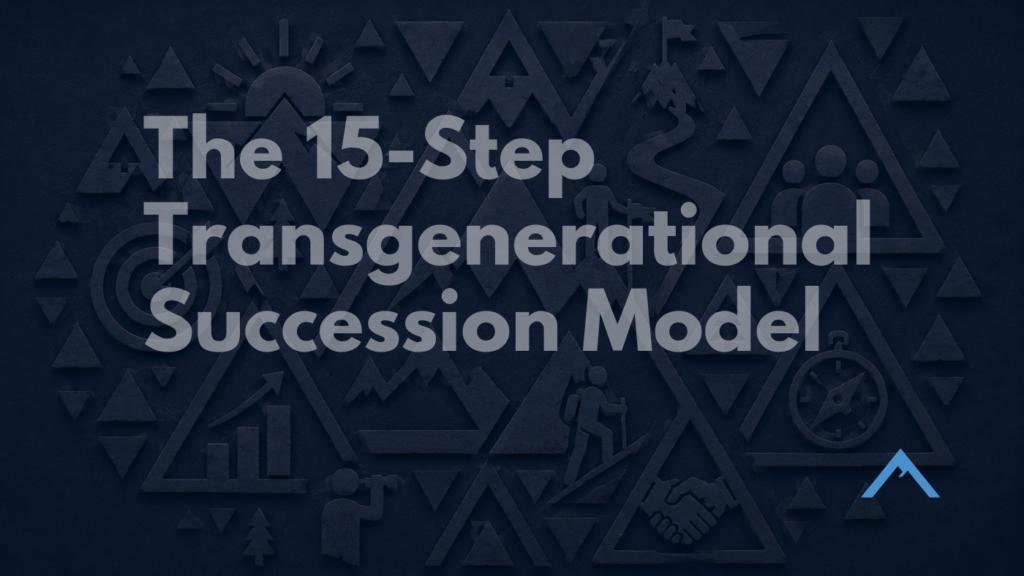
The 15-Step Transgenerational Succession Model
This model integrates systems theory, agency theory, principles of stewardship and fairness, and experiential leadership lessons from the trail. Here’s a high-level overview:
- Assess Current Reality: Evaluate the business’s current health, culture, and leadership gaps.
- Define Vision & Values: Align the family and business on long-term purpose.
- Identify Potential Successors: Look beyond assumptions, especially toward emerging female leaders.
- Develop Leadership Readiness: Create individualized growth plans.
- Build Governance Structures: Establish clear roles, boards, or advisory groups.
- Document Systems & Processes: Capture operational knowledge before it walks out the door.
- Address Family Dynamics: Facilitate open conversations and conflict resolution.
- Create Contingency Plans: Plan for the unexpected (illness, market shifts, etc.).
- Integrate Mentorship & Training: Pair experience with fresh perspectives.
- Implement Financial & Legal Frameworks: Ensure smooth ownership transfer.
- Test & Pilot Transitions: Gradual handoffs with real responsibility.
- Monitor & Measure Progress: Use key indicators for both business and relational health.
- Adjust & Adapt: Stay flexible as conditions change.
- Celebrate Milestones: Recognize progress and strengthen team bonds.
- Establish Ongoing Stewardship: Create mechanisms for continued guidance and accountability.
From Theory to Trail
One of the most powerful aspects of this model is its use of sled dog metaphors. Just as the lead dog sets direction but the entire team must pull together, successful succession requires every member to understand their role and trust the process.
In my own journey with Alaska Dog Works, I’m actively applying these steps as we transition day-to-day operations to my daughter Nicole while I shift into a strategic architect role. The results? More clarity, less overwhelm, and stronger momentum.
Ready to Upgrade Your System?
If you’re a family business leader feeling the weight of succession, or simply want to build something that outlasts you, this model provides a clear, actionable path.
Next Steps:
- Download the executive summary of the model
- Book a discovery call for personalized coaching
- Join my newsletter for monthly leadership insights with mushing metaphors
The trail ahead is full of possibility. Let’s make sure your legacy is ready for it.
Dr. Robert Forto
The Adventure Strategist®