At the AEE conference in Estes Park, Allison Jones and Joe Fox from the Wounded Warrior Project were running a session called ‘Small Choices, Lasting Impact: How Facilitation Shapes Outcomes’. The basic premise was that facilitation is shaped by the facilitator and by the program objectives. The choices you make as a facilitator around connection, challenge, reflection and goals will determine not just what people learn in the room, but what they take away with them.
Jones and Fox asked people to recall a goal they’d set and not achieved. Then the discussion moved on to what the goal had meant, what had got in the way, and what had been learned. They then prompted the group to consider where the three sets of goals could meet (the program goals, the facilitator’s goals and the participant’s goals). They could meet. They could also conflict. It’s a practical thing to name that difference before you even start an activity; it’s not a theoretical exercise.
They shared data from Project Odyssey (the 12-week program for post 9/11 veterans, their family members, and active service members). A number of goals were rated as very important but not very difficult. Around 62% of the participants achieved a stated goal.
Approx. 26% reported some degree of improvement without actually achieving the target. The rest were still in the process. The point they kept coming back to was that importance doesn’t necessarily equate to difficulty and that you can still have meaningful learning even if you don’t hit the original target.
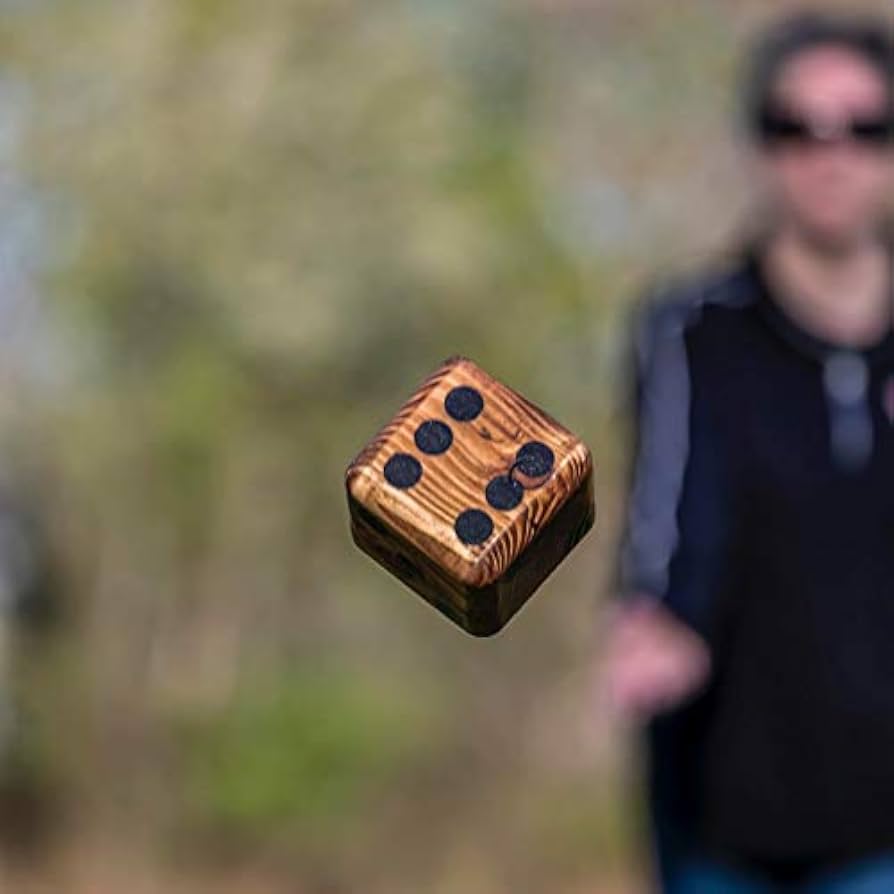
The session used a short dice exercise called the Risk Roll to make the point very concrete. People would roll a die in rounds. A roll of 3 to 6 would add to the running total. A 2 would double the total. A 1 would end the round at zero for anyone still in. You could always take your score and get out at any point.
The activity made individual goals, team goals, and risk decisions completely visible in real time. After the first round, the facilitators asked each person what their goal had been and how that goal had influenced their decision to keep going or to stop. That question turned the game into a facilitation issue rather than a scoring exercise.
The model is the classic Kolb cycle of experiential learning (experience, reflection, conceptualization and experimentation). Risk Roll provided the experience. The discussion that followed provided the reflection. The opportunity to then adjust your goals or your framing for the next round was the experimentation.
Research on adventure and outdoor programs has consistently shown that transfer is enhanced when participants set goals, have structured reflection, and can then test the revised approach (Sibthorp et al., 2011; Hattie et al., 1997). The NOLS transfer work found that the most commonly cited mechanisms were the instructor’s facilitation, the actual constraints of the experience, and the intentionality of the curriculum design. All three of these were present in the session.
For anyone facilitating a group that has to make decisions under real constraints (be that a leadership group, a trail crew, a dog mushing program, etc.), the practical takeaway is the same. Work out whose goals are at play. Build in enough structure so people can learn the conditions, but leave enough room for them to work out the constraints for themselves.
When the goal becomes unattainable, just sit with the person and ask them what success would look like from their perspective. Then adjust the goal so that progress is still visible. That adjustment is not a failure of the program. It’s the facilitation move that keeps the learning going.