At the AEE conference in Estes Park, Nate Folan ran a session called ‘4 Essential Practices for Group Facilitation’. The four practices were playing, relating, reflecting, and loving. It was an activity-based session, and they moved very quickly through each one. Folan made the point that 90 minutes was just a snapshot.
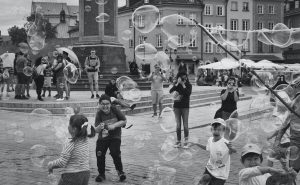
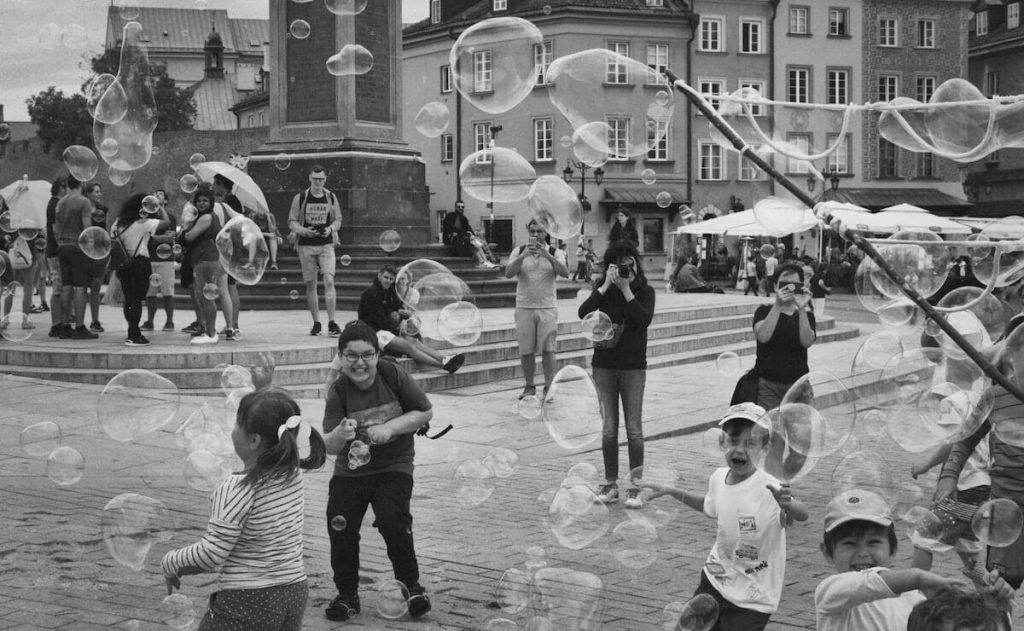
Playing starts with the observation that people seek comfort and that engagement often comes from movement beyond the familiar. He referenced Stuart Brown’s work on play and described a simple game he plays with his kids called Match/No Match. You take turns doing a high five and a fist bump. One person scores if the actions match, the other if they don’t. It gets faster, and then you rotate.
Folan paused when someone in the room said they didn’t understand the rules and made a point of the value of that statement in a group. He referenced Jane McGonigal’s definition of a game as being one with a goal, rules, feedback, and voluntary participation. He also pointed out that rules can sometimes make an activity less fun and that the spirit of play can, in fact, emerge without them.
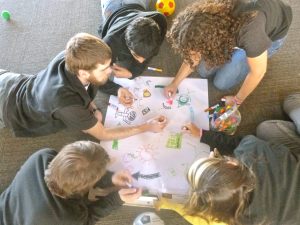
Relating took the group from play into connection. People stood with the type of play that resonated most or least with them and then naturally formed groups around commonalities (e.g., food, music). Folan offered the line ‘what divides us connects us, what connects us divides us’ using the waterways as a perfect example of that. He asked if anyone had formed a relationship as a result of something that wasn’t going well, and opened up the discussion around bias and assumptions, and whether a facilitator actually invites someone in or keeps their distance.
Reflecting was a much quieter personal moment. People would simply walk and stand in the type of play that felt least like them, with no talking at all, and reflect on why they were there. Folan pointed out that we all play and move differently, and that some activities can feel like too much in the moment.
Loving closed the session. There was some discussion about the word ‘love’ and how confusing it can be. Folan asked how many in the group loved someone who was very difficult to like or get along with. He framed the work as holding space for difference without necessarily trying to change the other person. He referred to the Choose Love movement and its four guides: the courage to face pain and fear and to show up as your true self; gratitude in the face of difficulty; forgiveness as the release of anger and resentment so that you can be present; and compassion in action as being the one who sees the pain or the need in another and then creates the space for that need to be met. He noted that the extreme applications of those are very difficult.
The four practices are all embedded within established models of experiential learning. Kolb’s cycle is evident in the progression from the activity (Match/No Match) to an immediate debrief on how the rules had governed the experience. Research on transfer in adventure and outdoor programs has identified the facilitator’s facilitation moves, the nature of the experience itself, and the degree of intentional design as the most commonly reported mechanisms of transfer.
Play research sees play as a context in which social and emotional learning takes place through voluntary, low-stakes interaction. Belonging literature demonstrates that the opportunity to name the difference and still be in the group is key to participation. None of these sources actually prescribe the four practices as a sequence. They do, however, underpin the argument that a short amount of structured activity followed by a short amount of reflection can affect what people take away.
For anyone facilitating groups that have to make decisions under real constraints, the practical takeaway is the same. The four practices don’t replace the constraints in any way. They are a set of moves the facilitator can use within the constraints.
Curcio, E., & Di Bernardo, M. (2025). Knowledge and Arts. Questioning Reality Through Video Game and Theatre. Global Philosophy, 35(3), 14.
Henríquez, V. V., Rabanal, I. C., & Abásolo, J. S. (2025). Applying Kolb’s experiential learning cycle for deep learning: A systematic literature review. Social Sciences & Humanities Open, 12, 102096.
Barrett-Rodger, L., Goldspink, S., & Engward, H. (2026). Low-stakes, high-interest learning: a hermeneutic phenomenological study of children learning mathematics outdoors. Journal of Adventure Education and Outdoor Learning, 1-21.