At the AEE conference in Estes Park Brian Brandt from WSU Extension was running a session entitled “From Point A to Point B: Reflection and Debriefing on the Move”. The point was practical: reflection doesn’t have to be confined to the end of the day with a formal circle. The move itself, the transition, the walk between activities, can be used to facilitate structured reflection without any added weight or time.
Brandt used three portable tools: picture cards, objects, and postcards. Each was paired with a set of prompt sheets structured around the three stages of Before the Journey, Beginning the Journey, and the experiential reflection framework (What? So What? Now What?).
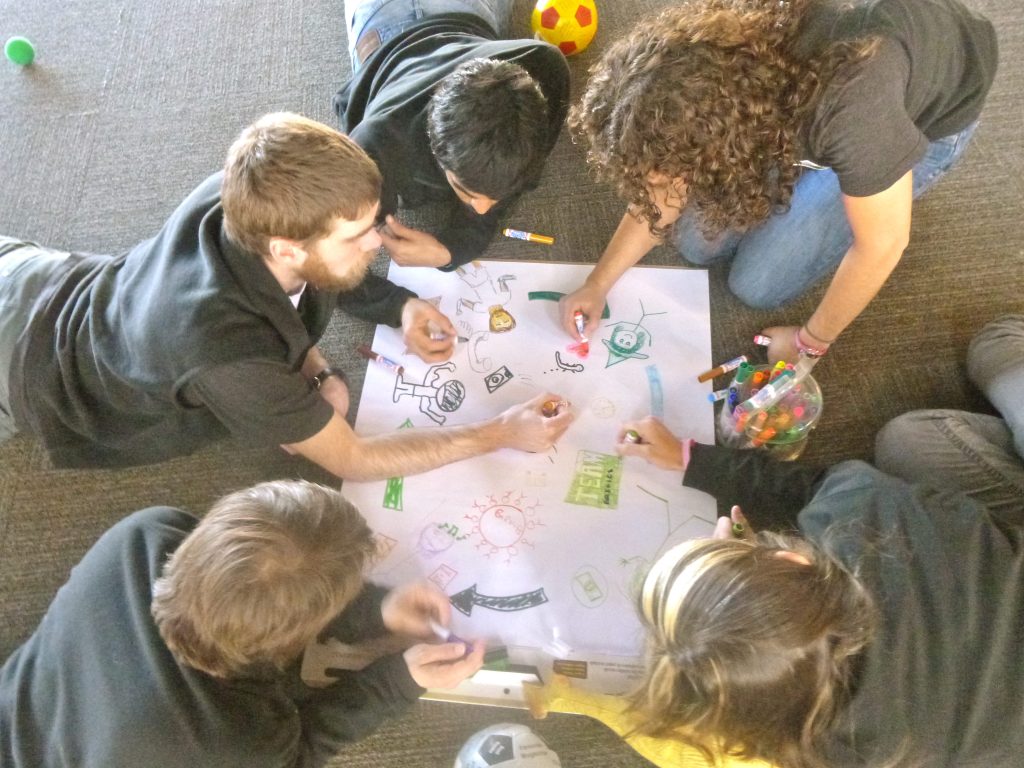
Participants selected a picture, an object, or a postcard that represented something tangible (how they were stepping into the day, a strength they were bringing, a goal for the activity, or a next step). They shared it with a partner briefly while standing or moving. The same structure was on the handouts, whether the prompt was an image or an object.
He also introduced the concept of “Journey Paths” with Explorer, Adventurer, Seeker, Wayfinder, Crew/Team, Wonderer/Scientist, Hero, or Person in Transition to indicate the intent of the journey when that might not have been the participant’s intention. There was also a separate list of simple roles: Observer, Navigator, Recorder, Encourager, Listener, Questioner, Timekeeper, and Spokesperson.
Naming a role gives someone who didn’t design the itinerary a specific role to play. One strengths sheet was very straightforward (Brave, Caring, Curious, Patient, Responsible, Strong, Good Listener). Another sheet was more of a set of questions you could take with you: “What expectations am I taking with me?” “What question do I hope this journey will help me answer?” “What personal strength am I carrying today and when might someone else need it?”
The emphasis was on speed and low weight. A prompt can be photographed, written on paper, or carried on a single card. Groups can form a short cheer directed at other groups rather than at themselves. Movement was noted as a way to reduce the pressure of sustained eye contact during conversation.
Brandt presented the project as taking research-derived concepts into the community and inviting people to modify them to suit their own circumstances. For anyone facilitating a group that has to make decisions under real constraints (be that a leadership group, a trail crew, or a dog mushing program), the practical takeaway is the same. Reflection doesn’t need a perfect circle or any extra kit. It just needs a prompt that can travel and a facilitator who is prepared to use the transitions that are already there.