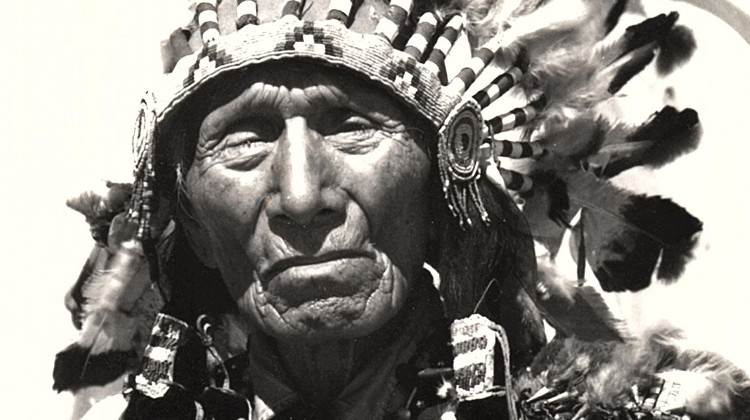
Crazy Horse was recognized for his proactive leadership style, consistently leading from the front. Historical accounts describe him as uninterested in personal recognition or political status. He deliberately avoided the spotlight and focused on protecting his people and preserving their freedom.
His influence did not derive from speeches or formal status.
Instead, he established influence through decisive action.
Followers were drawn to Crazy Horse because he consistently confronted challenges that others avoided. His quiet confidence assured others that he would never ask others to undertake actions he was unwilling to undertake himself.
This characteristic is significant in effective leadership. Today, changes in today’s business environment are increasingly complex and cannot be predicted with certainty. Factors such as technological developments, market dynamics, and regulatory changes pose challenges for organizations and companies. In the face of these rapid changes, adaptive and flexible leadership becomes critical to ensure business success and continuity (Karneli, 2023).
Teams rapidly lose trust when leaders distance themselves from hardship. When executives request sacrifice while maintaining their own comfort, this behavior is observed and undermines credibility.
Crazy Horse exemplified the opposite approach.
He actively shared risk with his followers.
Black Elk embodied a different model of leadership. His influence stemmed less from confrontation and more from interpretation, meaning, and perspective. He experienced significant cultural upheaval and dedicated years to preserving the spiritual identity and worldview of the Lakota people amid rapid destruction and forced change.
While Crazy Horse symbolized active resistance, Black Elk embodied continuity.
He recognized that cultures, organizations, and teams require more than action for survival. Individuals also need meaning and a robust sense of identity to endure uncertainty and change.
Contemporary leadership discourse frequently overlooks this necessity.
Organizations often prioritize metrics, productivity, and short-term growth, neglecting the fundamental question that teams consider: What collective purpose are we pursuing?
Black Elk recognized that leadership involves not only guiding individuals through conflict but also maintaining their connection to purpose during periods of change.
This distinction highlights a valuable contrast between the two leaders.
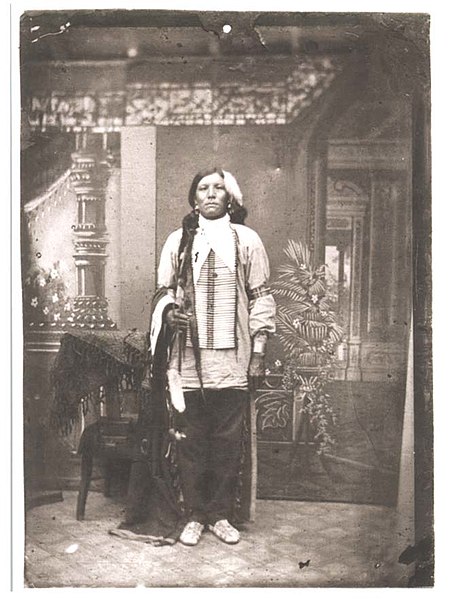
Crazy Horse exemplified the significance of courage, decisiveness, and shared sacrifice, whereas Black Elk emphasized reflection, cultural continuity, and enduring meaning.
Effective leadership frequently necessitates both approaches.
Certain situations require decisive action, while others demand clarity, perspective, and grounding before progress can occur. Leaders who focus solely on action risk causing burnout, whereas those who only reflect without acting may lose momentum.
The primary challenge lies in discerning which leadership approach is appropriate for a given situation.
This complexity underscores the inherent difficulty of effective leadership.
Authentic leadership seldom relies on a single dominant personality trait (Hoang, Luu, & Yang, 2025). Rather, it requires adaptability and a nuanced understanding of people, pressure, timing, and purpose to enable appropriate responses rather than emotional reactions.
This lesson is particularly pertinent in the current context.
Many organizations currently operate in environments characterized by uncertainty, persistent distractions, and rapid change. Teams experience exhaustion, fragmented communication, and fragile trust. Under these conditions, leaders often default to extremes, becoming either excessively aggressive or indecisive.
Black Elk and Crazy Horse present an alternative leadership model.
One leader illustrates the necessity of courage, while the other underscores the importance of meaning.
The most effective leaders cultivate the ability to provide both courage and meaning.
Read More: Leadership Lessons of Sitting Bull
Leadership Lessons From Black Elk and Crazy Horse
Leadership Requires Shared Sacrifice
Crazy Horse earned loyalty by accepting risk alongside his followers. Teams are more likely to trust leaders who remain attuned to the challenges faced by others.
Action Without Purpose Eventually Fails
Black Elk recognized that survival extends beyond physical or operational concerns. Organizations require shared values, identity, and direction to maintain long-term resilience.
Different Situations Require Different Leadership Styles
Certain circumstances require decisive action, while others necessitate patience and reflection. Effective leaders are adept at transitioning between these approaches.
People Follow Leaders Who Feel Grounded
Neither leader appeared motivated by personal fame. Their leadership was influential because it remained connected to values and purposes beyond individual interests.
Leadership Development Through Experience
Peak Experience assists leaders, educators, and organizations in developing practical leadership skills through experiential learning, leadership development workshops, and team-based challenges tailored to real-world pressures and uncertainty.
Leadership is not cultivated through theory alone.
It is built through experience, reflection, trust, and the ability to adapt when conditions change.
Sources:
Galvin, B., Bednar, J. and Bates, A. (2025), Existing Personal Leadership Prototypes Versus Organizational Leadership Prototypes: How Individuals Manage Tensions Between Leading With Authenticity and Conformity During Their Socialization as Leaders in Organizations. J Organ Behav, 46: 701-720. https://doi.org/10.1002/job.2863
Hoang, G., Luu, T. T., & Yang, M. (2025). A systematic literature review of authentic leadership in tourism and hospitality: A call for future research. Cornell Hospitality Quarterly, 66(1), 110-132.
Karneli, O. (2023). The role of adhocratic leadership in facing the changing business environment. Journal of Contemporary Administration and Management (ADMAN), 1(2), 77-83.